GANGLAND KILLERS

GANGLAND KILLERS

GANGLAND KILLERS

ARRESTS

ARRESTS

NARCO

NARCO

DRUGS

DRUGS

Translate

Fire in Benahavis

Monday, 18 August 2014

A fire has broken out in Benahavis, near Marbella. This photo was taken on the road between Estepona and San Pedro. The cause of the fire is still not yet known, but follows in the wake of a serious fire in Los Montes de Malaga exactly a week ago. The fire in Los Montes devestated 260 hectares of natural park. So far this year there have been 20 such fires in Malaga Province, which experts say is within the average range of annual fires.

Saudi prince's convoy in Paris attacked by gunmen

Heavily armed men have attacked a convoy of cars belonging to a Saudi prince, stealing 250,000 euros (£200,000; $330,000), police say. The convoy was heading through northern Paris on its way to Le Bourget airport late on Sunday evening when it was raided, reports say. The gunmen seized a vehicle carrying the money and documents, later releasing the driver and two others. The convoy was said to have come from the Saudi embassy. No-one was hurt. The gunmen, reportedly armed with Kalashnikov rifles, targeted a Mercedes mini-van at 21:15 (19:15 GMT) on the northern ring road, or peripherique, at Porte de la Chapelle, on the edge of Paris.

The motorcade, belonging to a Saudi prince, was targeted by eight people in two separate vehicles who pointed their guns at the driver of the Mercedes, forcing him to stop, French media reported.

The men then drove the vehicle away with the driver and the two other Saudis inside. No shots were fired but the Saudis were later freed and the vehicle eventually found burned out.

"In the vehicle there was roughly 250,000 euros in cash and official documents from the embassy," police union spokesman Rocco Contento told BFM TV news.

There has been a weekend of terror for immigrants in Tangiers

Immigrants who are waiting in Tangiers to cross into Spain have been attacked and their homes ambushed. The NGO’s at the scene fear the aggression against the Sub-Saharans will force them to try to cross the Strait to escape whatever the weather conditions.

The problem started on Friday near the Tangiers airport. The Sub-Saharan’s were told a bus was going to Spain and some 20 women and their children took up the offer. But the bus took them to a local dance festival of African culture called Twiza which was being held in Tangiers for some days. When they realised they had been fooled they returned home, and met a group of Moroccan men armed with machetes and sticks who started to hit them.

Five of the women suffered stab wounds and others suffered abuse. Spanish volunteer, Helena Maleno, was among them and believes the violence is being organised by criminal groups. She was sexually molested by one of the men. She said the Moroccans speech was always the same, ‘We want to clear up here, go to Spain’. Last year an immigrant died when he fell off a wall during a police raid, bringing charges of murderers against the police amid violent scenes as you can seen in the video below.

Spain: INTERPOL Targets Trafficking Of Stolen Vehicles

Thursday, 7 August 2014

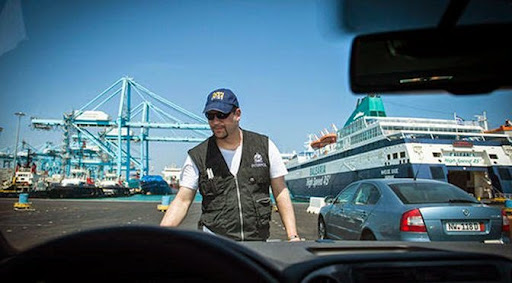
In an INTERPOL-supported operation in Spain targeting the trafficking of stolen vehicles, nearly 20 vehicles were recovered and some 15 individuals arrested. Led by the Spanish National Police, Operation Paso del Estrecho (which means ‘crossing the straits’), was conducted from 28 July to 1 August at the port of Algeciras in southern Spain, a known route used by organised criminal networks to smuggle cars stolen from throughout Europe into North Africa.

With the assistance of INTERPOL’s Stolen Motor Vehicles (SMV) unit, police monitored car ferries leaving the port en route to Morocco, with some 5,000 vehicles screened against INTERPOL’s SMV database. INTERPOL coordinated the deployment of 28 experts from seven countries to support the operation. The experts are members of the INTERPOL Stolen Motor Vehicles (SMV) Task Force, comprising police and private investigators who support member countries with operations targeting the theft and trafficking of motor vehicles. The INTERPOL SMV database contains more than 7 million records submitted by 128 member countries. In 2013, countries searched the database more than 125 million times, resulting in 117,000 positive hits. “Operation Paso del Estrecho was very important because it allowed us not only to detect and recover stolen vehicles from Spain and other European countries, but also to obtain crucial information that will allow us to continue our investigations into the organized crime groups dedicated to illegal vehicle trafficking,” said Ángel Arroyo Morales, Head of the vehicle crime investigation unit of the Spanish National Police Central Squad of Organized Crime. “There is no doubt that with strong cooperation between INTERPOL and police across Europe and beyond, we will continue to recover even more stolen vehicles before they can be used for criminal purposes,” he concluded. In addition, 15 people were arrested during the operation, including one Ukrainian and two Spanish nationals arrested in connection with a major investigation of the Central Squad of Organized Crime of the Spanish National Police.

They are suspected of being the masterminds behind a vast trafficking ring transporting stolen luxury cars between Spain and Ukraine, via Poland and Moldova. The stolen vehicles seized came from various European countries including Belgium, France, Germany, Italy, the Netherlands and Sweden, demonstrating the transnational character of this crime. “The trafficking of stolen vehicles is a crime that knows no borders. The only way to effectively combat the organized criminal networks behind this crime is therefore through coordinated joint actions, as evidenced by this successful operation,” said INTERPOL’s Director of Specialized Crime and Analysis, Glyn Lewis. Operation Paso del Estrecho is an annual initiative conducted by Spanish police in Algeciras – a major gateway between Europe and Africa which sees approximately 4.8 million people and 1.3 million vehicles pass through each year – to prevent stolen vehicles from leaving the country and to identify and disrupt the criminal groups responsible for the illicit trafficking. Highlighting the links between organized crime and the trafficking of stolen motor vehicles – which are often used in the commission of other serious crimes – is a key part of INTERPOL’s global Turn Back Crime campaign. The campaign aims to raise awareness of these hidden links, and of the very real effect these crimes can have on people’s daily lives.

Major crime gang link as Matthew Macklin’s coach survives assassination attempt

Wednesday, 6 August 2014

Former European boxing champion Jamie Moore is under armed police guard in a Spanish hospital after he was shot in the legs in Marbella at the weekend. 

Moore is currently based in Spain with his wife and two children where he is training Irish boxer Matthew Macklin at the MGM gym in Puerto Banus ahead of his upcoming fight in the National Stadium on August 30. Moore was shot in both legs and the foot when the gunman targeted him after he left a party on Saturday night but his injuries are not believed to be life-threatening. “Just to let everyone know Jamie Moore is still in hospital but he should be ok,” Macklin tweeted last night. “He was shot in his legs but the doctors have said there shouldn’t be any serious or permanent damage done.”

The coach and well-respected Sky Sports pundit who has no involvement in crime agreed to become Macklin’s coach last year, but gardai sources have indicated that “special surveillance plans” are in place for the upcoming fight. The villa where Moore was shot is owned by boxing manager Daniel Kinahan, a key member of the Christy Kinahan crime syndicate which operates a sizeable crime operation on Spain’s infamous Costa del Crime. Nicknamed the ‘Tipperary Tornado’, Birmingham-born Macklin has no involvement in crime but has been photographed in the company of major gangsters Gary Hutch and Daniekl Kinahan at major events.

Former British and European champion boxer Jamie Moore has been shot in Marbella

Tuesday, 5 August 2014

Former British and European champion boxer Jamie Moore has been shot in Marbella - apparently in both legs.

Moore, the former European light-middleweight champion, was in Spain working at a gym owned by boxer, Matthew Macklin, who he is training.

It is understood the 35-year-old Moore, from Walkden, Greater Manchester, has now left hospital after treatment.

Moore, highly regarded in the sport, was on the verge of a WBC title shot, in 2009, but decided to quit the sport in 2010 on medical grounds.

Moore is a former two-time British light-middleweight champion and Commonwealth champion.

A source told the Manchester Evening News: "It would appear he was out and about, not at the gym, when he was shot."

A spokesman for the Foreign Office confirmed that a British national had been shot over the weekend.

Moore was helping prepare Mackin for a fight in Dublin later this month against Argentinian, Jorge Sebastian-Heiland for the WBC international midldeweight title.

As well as a working as a trainer Moore has worked as a TV commentator.

He is a friend of former boxer, Ricky 'The Hitman' Hatton, who told the Manchester Evening News 'battler' Moore would bounce back from the attack.

He said: "I'm devastated by this news. Jamie is a great pal of mine and my thoughts are, of course, today with him and his family.

"He's a great battler and if anyone's going to pull through in hospital it'll be him."

Moore has spoken at several charity events and fundraising dinners for boxers' whose carrers have been cut short by injury.

Moore won a legendary fight with Macklin in 2006 at the George Carnell Leisure Centre in Davyhulme in what was dubbed the 'fight of the year'.

He won 32 of 37 bouts with 23 being knockouts.

Moore boxed an an amateur before turning professional in 1999.

One of Moore's most memorable moments came last year in a three-round knockout victory over Michele Piccirillo for the European belt.

He will also be remembered for his domestic fights with Matthew Macklin, Michael Jones and Ryan Rhodes.

Local Spanish police are investigating the shooting and are likely to alert Britain's National Crime Agency.

So far there have been no arrests.


High Alert in Casablanca Airport After Death of Woman Returning from Mecca

Monday, 4 August 2014

Morocco’s Mohammed V international airport is under high medical alert since a 76-year old woman died immediately upon her return from Mecca. Within the first hours after her death, Moroccan authorities feared the death was caused by the Ebola virus. But a statement from the Ministry of Health said the woman suffered from an acute “pulmonary edema.” It is unclear, however, whether this statement will dispel people’s fears regarding the safety of the 30,000 Moroccans who will go to perform pilgrimage next September. Last June, following the emergence of Ebola or Mers (Middle East Respiratory Syndrome) virus in Saudi Arabia, Morocco recommended its pilgrims to cancel their planned trips to Mecca this year. The Moroccan Ministry of health advised Moroccans who decide to go ahead with their pilgrimage to put on masks, which are offered for free by Moroccan authorities.

Ebola terror at Gatwick as passenger collapses and dies getting off Sierra Leone flight

Airport staff tonight told of their fears of an Ebola outbreak after a passenger from Sierra Leone collapsed and died as she got off a plane at Gatwick. Workers said they were terrified the virus could spread globally through the busy international hub from the West African country which is in the grip of the deadly epidemic. The woman, said to be 72, became ill on the gangway after she left a Gambia Bird jet with 128 passengers on board. She died in hospital on Saturday. Ebola has killed 256 people in Sierra Leone. A total of 826 have died in West Africa since the outbreak began in February. Tests were carried out to see if the woman had the disease. The plane was quarantined as ­officials desperately tried to trace everyone who had been in contact with the woman. Airport workers faced an anxious wait to see if the woman had Ebola. One said: “Everyone’s just ­petrified. “We’ve all seen how many people have died from Ebola, especially in Sierra Leone, and it’s terrifying.”

Dream Warrior Recovery: Individual selfhood is expressed in the self's capacity for self-transcendence

Wednesday, 23 July 2014

Dream Warrior Recovery: Individual selfhood is expressed in the self's capacity for self-transcendence

Individual selfhood is expressed in the self's capacity for self-transcendence and not in its rational capacity for conceptual and analytic procedures." Reinhold Neibuhr - Theologian/Author of the "Serenity Prayer"

Tramps bikie club loses appeal to get back its guns because of link to Hells Angels Motorcycle Club

Tuesday, 22 July 2014

MEMBERS of a small-town motorcycle club linked to the Hells Angels have failed in their appeal to retrieve their confiscated guns. A decision was handed down today by the Victorian Civil and Administrative Tribunal upholding a decision to cancel four Tramps bikies’ gun licences because of their membership and social associations with other gangs. The verdict comes almost a year after nine current and former members of the Tramps MC fronted the Firearms Appeal Committee, one of which is a mobile butcher, arguing that Victoria Police had no right cancel their licences. Club head Ronald Harding, who took leave to withdraw, butcher Michael Oxenham, Malcolm Dinsdale and David Windsor are now considering appealing the decision to the appeal court of the Victorian Supreme Court. In August 2012, Chief Commissioner Ken Lay made a controversial decision to seize more than 100 registered guns from members of “outlaw’’ bikie gangs across the state. The VCAT appeal, taken on by four Tramps members, was seen as a test case for other “outlaw’ bikie members who also had their gun licences cancelled. The guns were seized under the test to whether the licence holder was a “fit and proper’’ person.

Spanish police have arrested a Colombian drug boss dubbed ‘The Mouse’, the alleged leader of a major cocaine smuggling gang accused of 400 killings

Sunday, 20 July 2014

Spanish police have arrested a Colombian drug boss dubbed ‘The Mouse’, the alleged leader of a major cocaine smuggling gang accused of 400 killings, officials said on Saturday. Officers arrested the 40-year-old, whose real name is reportedly Hernan Alonso Villa, in the eastern seaside city of Alicante on Friday, according to a police statement. He is considered ‘the top leader of the military wing of the Oficina de Envigado, a Colombian criminal organisation accused of 400 killings as well as drug-trafficking, extorsion and forced displacements of Colombian citizens’, it said. ‘He is one of the criminals most wanted by the Colombian authorities. He had more than 200 people under his command and was responsible for exporting cocaine to Spain, the United States and Holland,’ the statement said. Spanish officers arrested him under a Colombian extradition warrant for charges including alleged homicide and arms offences. He was carrying 40,000 euros ($54,000) in cash when he was caught, the statement said. Authorities say the ‘Oficina’ gang dates back to the 1980s when it carried out killings for the now-dismantled Medellin Cartel. Spain is one of the main entry points for illegal narcotics into Europe and Colombia is one of the world’s biggest sources of cocaine. Colombia produced 290 tonnes of cocaine in 2013, according to the United Nations Office on Drugs and Crime.

12 arrested in Mexico border city over female murders

Sunday, 13 July 2014

Mexican prosecutors have arrested 12 people in connection with the slayings of 11 young women whose skeletal remains were found near Ciudad Juarez, the violence-plagued border city which has drawn international attention for female murders.

12 arrested in Mexico border city over female murders

Mexican prosecutors have arrested 12 people in connection with the slayings of 11 young women whose skeletal remains were found near Ciudad Juarez, the violence-plagued border city which has drawn international attention for female murders.

Griselda Blanco, gunned down in Medellin, Colombia Two armed riders pulled up to Blanco as she was leaving a butcher shop in her hometown

Tuesday, 4 September 2012

Florida Department of Corrections

Griselda Blanco in 2004.

The convicted Colombian drug smuggler known as the “Godmother of Cocaine,” Griselda Blanco, 69, was gunned down by a motorcycle-riding assassin in Medellin, Colombian national police confirmed late Monday, according to the Miami Herald.

Blanco spent nearly 20 years in prison in the United States for drug trafficking and three murders before being deported to Colombia in 2004, the Herald reported.

Two armed riders pulled up to Blanco as she was leaving a butcher shop in her hometown, and one shot her twice in the head, the Herald reported, citing a report in El Colombiano newspaper.

Family members said Blanco had cut her ties to organized crime after returning to her country, the BBC reported. Police said they were investigating the motive.

Blanco was one of the first to engage in large-scale smuggling of cocaine into the United States from Colombia and set up many of the routes used by the Medellin cartel after she was sentenced in the United States in 1985, the BBC reported.

Investigators told the Herald that they estimate conservatively that Blanco was behind about 40 slayings. She was convicted in connection with three murders: Arranging the killing of two South Miami drug dealers who had not paid for a delivery, and ordering the assassination of a former enforcer for her organization, an operation that resulted in the death of the target’s 2-year-old son, the Herald reported.

Three of Blanco’s husbands were killed in violence related to drugs, the Herald reported, and one of her sons was named Michael Corleone, a reference to “The Godfather” movies.

Blanco is credited with originating motorcycle assassinations, the Herald reported.

“This is classic live-by-the-sword, die-by-the-sword,” filmmaker Billy Corben, who with Alfred Spellman made two “Cocaine Cowboys” documentaries, told the Herald. “Or in this case, live-by-the-motorcycle-assassin, die-by-the-motorcycle assassin.”

Bikie gang suspects in brawl arrests at Penrith shopping centre

Monday, 27 August 2012

FOUR men with alleged links to outlaw motorcycle gangs were arrested last week after a brawl at a Penrith shopping centre. Police officers from the gangs squad and Penrith local area command had been investigating the brawl, which forced shoppers to flee for their safety about 2.45pm last Monday. Police will allege a man was leaving the shopping centre when he was confronted by a group of nine men and fighting began. A number of people tried to intervene, including an unknown male who was assaulted. All involved in the brawl then left the scene. At 7am last Thursday, police simultaneously raided four homes at St Marys, Emu Plains, South Windsor and Freemans Reach. Three men with alleged links to the Rebels were arrested at St Marys and Emu Plains, while an alleged senior Nomads member was arrested at Freemans Reach. During the search warrants, police seized distinctive gang clothing, quantities of anabolic steroids and prescription drugs and a set of knuckledusters. A man, 29, of Emu Plains, was charged with affray, participate in a criminal group and two counts of possess prescribed restricted substance. A man, 44, of Freemans Reach, was charged with affray, possess prohibited weapon, and two counts of possess prescribed restricted substance. A man, 25, of St Marys, and a 23-year-old New Zealand man were each charged with affray and participate in a criminal group. Penrith crime manager Detective Inspector Grant Healey said further arrests were anticipated.

27 charged in California-Mexico methamphetamine ring

 Local and federal authorities moved Thursday to break up an alleged drug trafficking ring connecting a major Mexican cartel and San Gabriel Valley street gangs, arresting 17 people in a pre-dawn sweep. A federal indictment unsealed Thursday charges 27 defendants with making, possessing and dealing methamphetamine imported by La Familia Michoacana, one of Mexico’s most violent cartels, to two Pomona gangs: Los Amables and Westside Pomona Malditos. Seven law enforcement agencies, including the Pasadena and Pomona police, the Los Angeles County Sheriff’s Department, the FBI and the Drug Enforcement Administration, were involved in the sweep. Thursday’s crackdown is the culmination of a probe called Operation Crystal Light, a 16-month investigation by the San Gabriel Valley Safe Streets Gang Task Force. The investigation was launched after a 2011 kidnapping among suspected gang members in Southern California. Officers said they seized nine weapons, an undisclosed amount of methamphetamine, other drugs, and paraphernalia in Thursday morning raids in Los Angeles, Riverside and San Bernardino counties. The probe involved about 200 law enforcement officers and several undercover purchases. “The goal of the federal task force is to disrupt the network so it’s disrupted permanently,” Timothy Delaney, special agent in charge of the FBI’s Criminal Division in Los Angeles, said. “Today’s arrests took some very serious players in the methamphetamine world off the streets.” The methamphetamine came into the country in liquid form via airplane, boats and cars, officials said. The drug was recrystallized at an Ontario home before local gangs would sell it and funnel money to the Mexican cartel. Most of the drugs were being sold in Pomona and Ontario, according to Assistant U.S. Atty. Shawn Nelson. Dealers were selling multiple pounds a day and making up to $9,000 per pound, Nelson said. He described the arrests as “a good dent” in the Mexican cartel’s local drug network. Three suspects were in custody before the raid and seven remain at large, federal authorities said. The indictment alleges that a La Familia Michoacana associate named Jose Juan Garcia Barron oversaw the transport of the meth between Mexico and Los Angeles County. Delaney said Garcia Barron is among the suspects who have not been apprehended. The 17 arrested Thursday were expected to make their first court appearance Thursday afternoon at U.S. District Court in downtown Los Angeles.

Police think Ogden drive-bys are tied to gang's power struggle

Police believe drive-by shootings at an Ogden home Tuesday night and Wednesday morning may be related to a violent power struggle within a street gang over control of leadership, drugs and money. Ogden Police Lt. Scott Conley declined to identify the gang, but said members are not affiliated with the Ogden Trece. On Monday, 2nd District Judge Ernie Jones issued a permanent injunction against Trece members, banning them from associating with each other in public and being in the presence of guns, drugs and alcohol. The injunction also places Treces under an 11 p.m. curfew. The drive-by shootings at a home in the 500 block of 28th Street are signs of in-fighting among members of a local gang who are attempting to resolve their differences through escalating violence, Conley said. “They are in the same gang and are arguing back and forth,” he said, noting police have gathered intelligence on the dispute. “We are taking enforcement action to eradicate the problem or get the individuals involved incarcerated.” Six to eight gang members are believed to be involved in the dispute.

The nine people believed injured by stray police gunfire outside the Empire State Building were not the first to learn how dangerous a crowded street can be in a gunfight.

Saturday, 25 August 2012

 Civilians occasionally find themselves in harm's way when officers use deadly force, though usually only a handful of times annually. When that happens, a rigid process of investigation is set in motion — and the police department can reasonably expect a lawsuit. The latest episode came when police say a man disgruntled over losing his job a year ago shot a former colleague to death and pointed his weapon at two police officers in the shadow of a major tourist attraction. He apparently wasn't able to fire before police killed him, one firing off seven rounds and the other nine. Bystanders suffered graze wounds, and some were struck by concrete gouged from buildings by the bullets, authorities said. At least one person said he was actually hit by a bullet. Robert Asika, a 23-year-old tour guide who was hit in the right arm, said he was "100 percent positive" he was shot by a police officer. A witness told police that laid-off clothing designer Jeffrey Johnson fired at officers, but ballistics evidence so far contradicts that, authorities said.

Tracking a Rare Tattoo-Related Infection

Thursday, 23 August 2012

A Trail of Ink: Tracking a Rare Tattoo-Related Infection

PHOTO: Tattoo ink skin infection
An uncommon skin infection led to a doctor's investigation into tainted tattoo ink. (Monroe County Health Department)
The reddish-purple rash, seemingly woven into the tattoo on a 20-year-old New Yorker's forearm, was strange enough to have doctors scratching their heads.

This trail began when the man received a tattoo in Rochester, N.Y. in October 2011. A short while later, he noticed the raised, bumpy rash. He called his primary care physician.

Doctors initially treated the man's arm with topical steroids, thinking that the rash was allergic-contact dermatitis. But that only made the problem worse.

By the time dermatologist Dr. Mark Goldgeier saw the patient, it was clear that this was no simple allergy.

He performed a skin biopsy so he could take a closer look at the rash under a microscope. What he saw was startling: the sample was riddled with a wormlike bacterium related to tuberculosis.

"I explained [to the patient] that he had TB, and he had a look of horror on his face," Goldgeier said.

For the patient, the finding meant a trip to an infectious disease specialist to start up to a full year of treatment.

Goldgeier, meanwhile, called the Monroe County Health Department.

"As soon as biopsy came back," he said, "I knew something in the process of tattooing was involved -- the ink, the water used for dilution, the syringes, the dressings."

And so began a nationwide medical mystery.

An article published Wednesday in the New England Journal of Medicine describes how this one dermatologist helped connect the dots in an outbreak of tattoo-related atypical skin infections.

Dr. Byron Kennedy, public health specialist at Monroe County Department of Public Health, took over the case from Goldgeier. Kennedy first confirmed the results by repeating a skin biopsy on the patient. Once again, tendrils of mycobacterium chelonae, a type of tuberculosis-related skin bacteria, showed up in the sample.

Mycobacterium chelonae is a rapidly growing bug found in soil, dust, water, animals, hospitals, and contaminated pharmaceuticals. This family of bacteria does not commonly affect healthy individuals, but in patients with suppressed immune systems -- like those with HIV or on chemotherapy -- these bacteria can cause serious disease, often resulting in death.

The finding sent Kennedy and his associates to the tattoo parlor where the patient had been inked. Everything in the clinic was sterile, which made it unlikely that the infection had arisen there. But the tattoo artist, they learned, had been using a new gray premixed ink purchased in Arizona in April 2011; he used the ink between May and December 2011.

The ingredients of the ink -- pigment, witch hazel, glycerin, and distilled water -- seemed innocuous enough. But further examination revealed that the distilled water in the pigment was the likely culprit of the contamination.

The finding raised a number of questions -- not the least of which was how the bottles of premixed ink passed U.S. Food and Drug Administration regulations.

The U.S. Centers for Disease Control and Prevention acknowledged this gap in regulations Wednesday in its Morbidity and Mortality Weekly report.

"Under the Federal Food, Drug, and Cosmetic Act, tattoo inks are considered to be cosmetics, and the pigments used in the inks are color additives requiring premarket approval," the report says.

Armed gang fight breaks out in Venezuelan prison

Twenty-five people were killed and 43 others hurt in a prison battle in Venezuela as two armed gangs vied for control of a penitentiary near Caracas, authorities said on Monday.

LinkWithin

Related Posts with Thumbnails